
WORKPLACE MENTAL HEALTH INVESTMENT IMPACT SCORECARD
Think of This as a Credit Score for Your Workplace Mental Health System
Most organizations invest in mental health benefits and see little return. This scorecard tells you exactly why — and where to focus first. You'll get a personalized score across 6 critical dimensions with specific, actionable recommendations.
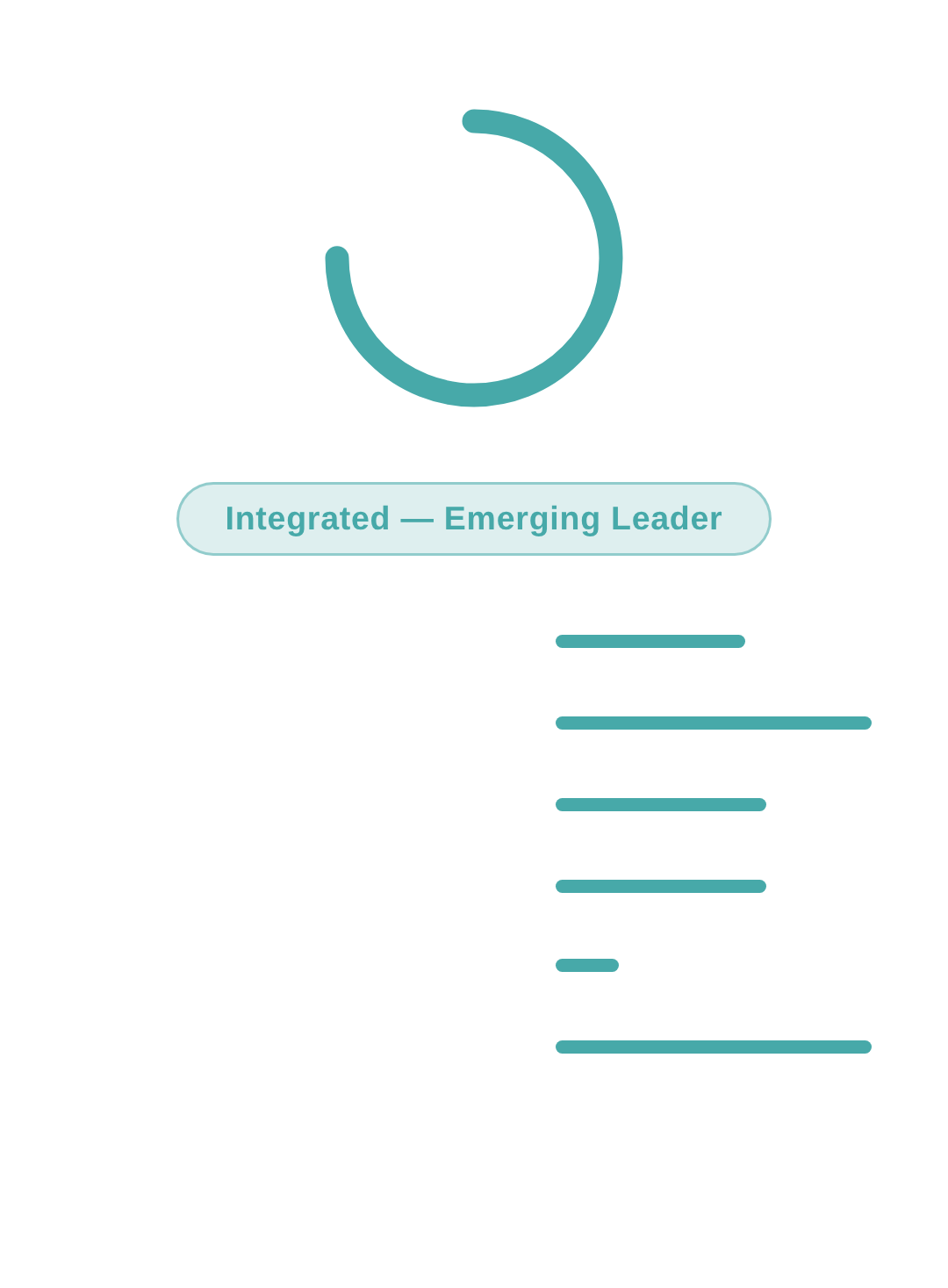
Where Does Your Organization Land?
Every workplace mental health system falls somewhere on this spectrum. Your score tells you exactly where you are and what it takes to move forward.

0-40 POINTS
At Risk
REACTIVE
Programs exist in name only. Crisis response is improvised. Employees in distress have nowhere safe to turn, and leadership has no data to act on.
41-65 POINTS
Fragmented
COMMON
This is where most organizations land. Some programs exist, but they aren't connected, measured, or trusted—awareness without systems change.
66-80 POINTS
Integrated
EMERGING LEADER
Meaningful infrastructure is in place. Gaps are specific and addressable. With targeted action, Culture Leader status is within reach in 12–18 months.
81-100 POINTS
Culture Leader
MODEL ORGANIZATION
Psychological safety is lived, not just stated. Mental health is embedded in operations. This organization is a model for others — and employees know it.
What the Scorecard
Actually Measures
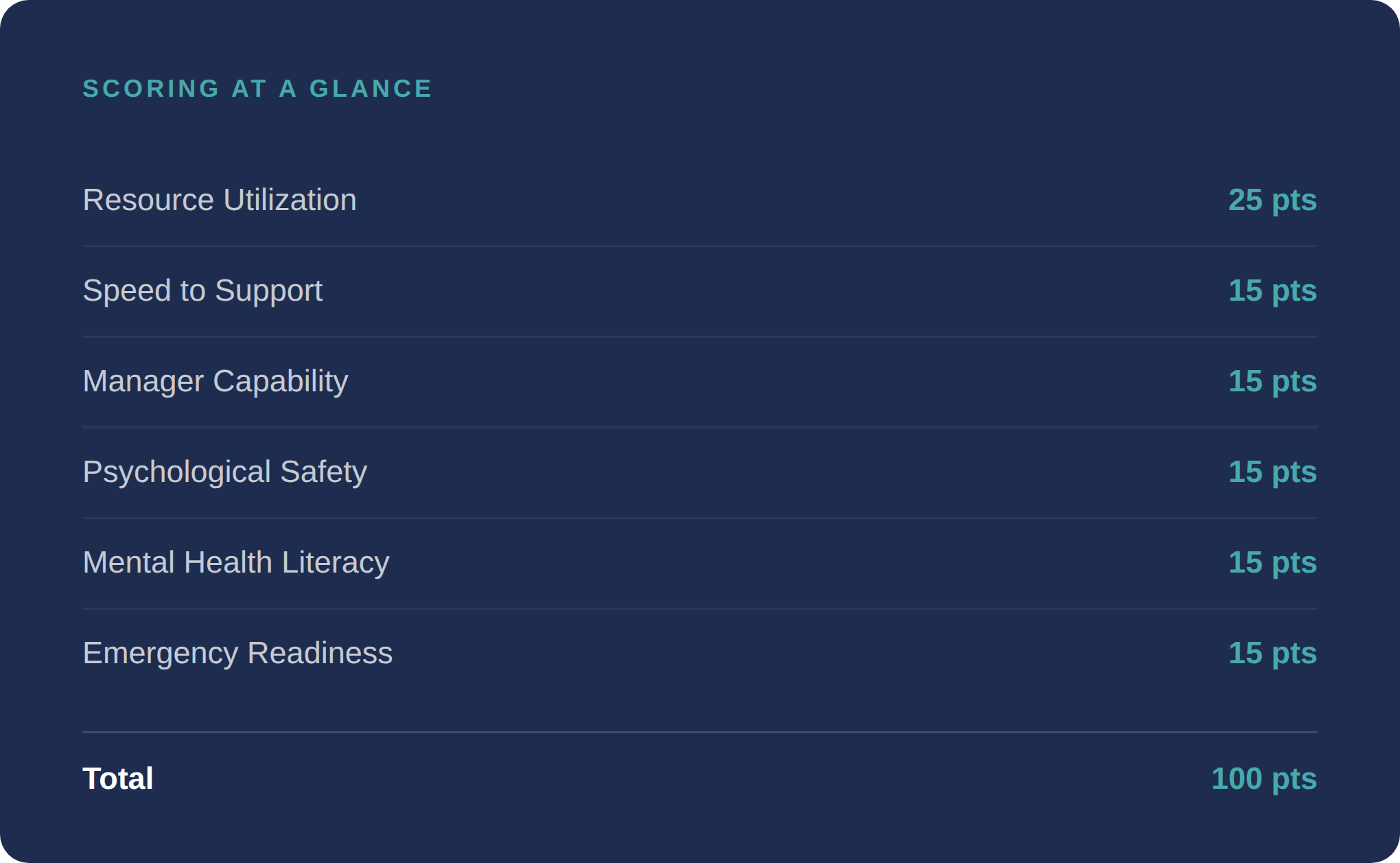
The scorecard assesses your organization across 6 dimensions that research shows are the strongest predictors of whether a workplace mental health system will actually work, or just look good on paper.
📊
Resource Utilization
Up to 25 points
Are people actually using the mental health benefits you're paying for? EAP utilization is the most direct measure of whether your investment is reaching employees who need it — or sitting unused in a benefits brochure
"What percentage of our employees are actively using EAP support?"
🛡️
Psychological Safety
Up to 15 points
Resources mean nothing if people don't feel safe using them. Psychological safety — the degree to which employees believe they can ask for help without stigma or career consequence — is what converts programs into actual support.
"Do our teammates feel safe asking for mental health support at work?"
⚡
Speed to Support
Up to 15 points
When someone finally decides to reach out, how long do they wait? Long wait times are one of the leading reasons employees give up on help-seeking. Speed to ongoing counseling — not just crisis response — is what matters.
"How quickly can an employee access ongoing counseling support?"
📚
Confidence in Help Offering & Mental Health Literacy
Up to 15 points
Are you doing anything beyond awareness campaigns? Awareness alone earns 1 point. Ongoing training, peer support, and leadership modeling is what moves the needle — and what this dimension rewards
"Are we investing in skill-building beyond awareness campaigns?"
👥
Manager Capability
Up to 15 points
Managers are the front line of mental health support — but fewer than 30% feel confident having a mental health conversation. Without trained managers, your programs stay invisible and warning signs go unnoticed until they escalate.
"What percentage of our managers feel confident supporting an employee in distress?"
🚨
Mental Health Emergency Readiness
Up to 15 points
The worst time to figure out how to respond to a mental health crisis is during one. This dimension measures whether your organization has a practiced plan for suicide, trauma, addiction, and overdose situations — before they happen.
"Do we have a formal, practiced plan for a mental health emergency?"
Get Your Score in 5 Minutes
Free. No email required to see your score. Instant personalized results.
Book a consultation
Book a free consultation with our team to walk through your score and explore your next steps.